Sex in space? Sperm struggles to navigate during weightless sex
While these results pose significant challenges for the future of space colonization, they also give scientists better insight into how gravity affects the development of life here on Earth.
"From the moment a sperm begins its journey to the moment an embryo starts to develop, gravity appears to play a role we are only starting to uncover," McPherson said. "Gravity is not just a backdrop to life, it is deeply embedded in the biological processes that create it."
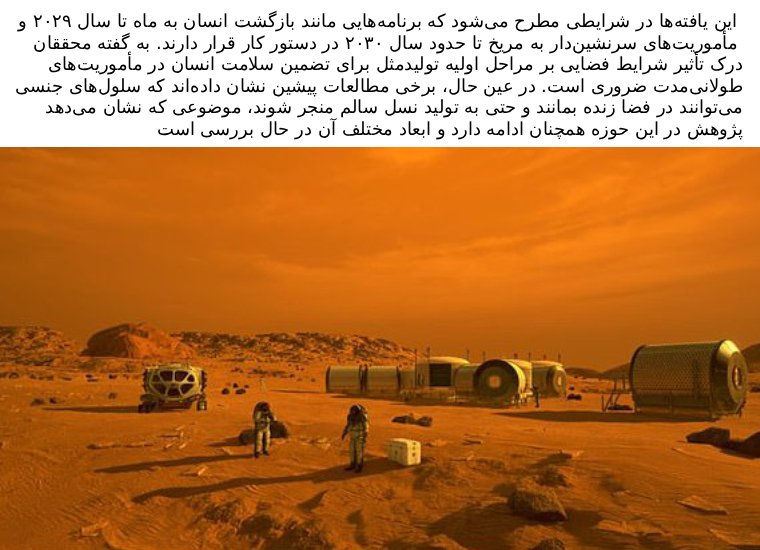
The findings come as plans to return humans to the Moon by 2029 and manned missions to Mars by around 2030 are on the agenda. Understanding the impact of space conditions on the early stages of reproduction is essential to ensuring human health on long-duration missions, the researchers said. At the same time, some previous studies have shown that sex cells can survive in space and even lead to the production of healthy offspring, a topic that shows that research in this area is still ongoing and its various dimensions are being explored.
Earth egg fertilization embryo hormone human Mars McPherson MOON navigate progesterone Researchers Sex Sex in space Space SPERM weightless
2026-03-30
 newsoholic Time to become News Oholic!